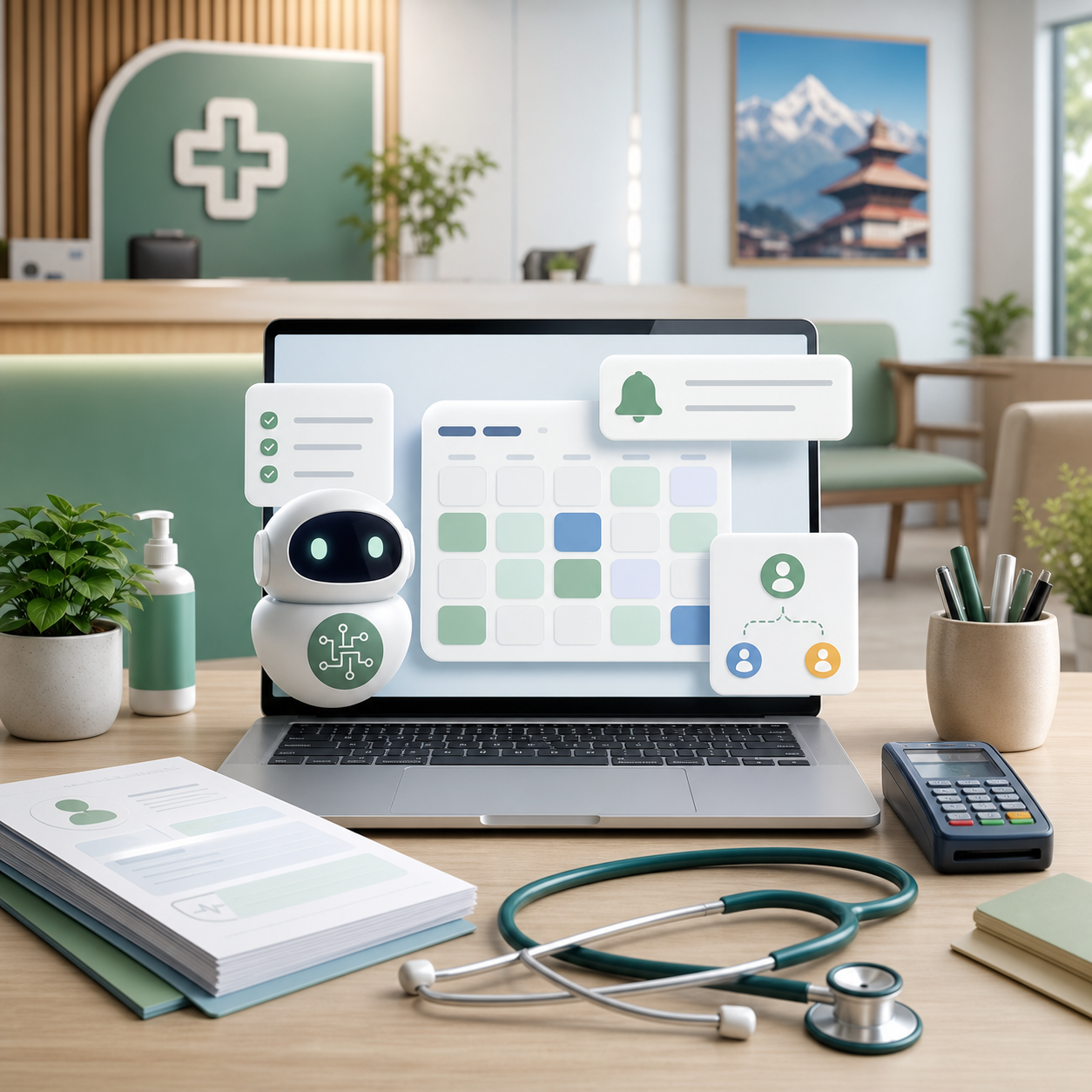
Clinic front desks handle repeated calls: doctor timing, service list, location, fees, reports, and appointment changes. AI can help with this admin work when the source is current.
The first clinic pilot should not answer medical questions. It should reduce the work around booking and front desk follow-up. That means appointment requests, doctor schedules, service hours, location, preparation notes approved by the clinic, and staff handoff.
Set the medical boundary
The system should not diagnose, suggest medicine, or judge symptoms. It can ask for basic details and send urgent or unclear messages to staff.
Write this boundary into the flow. If a patient mentions chest pain, severe bleeding, trouble breathing, pregnancy concern, child illness, or medicine reaction, the system should stop and route the message to staff or emergency instructions approved by the clinic. Do not let a general bot improvise.
The bot can answer admin questions: doctor availability, clinic hours, address, parking, report pickup time, accepted payment methods, and documents to bring. Keep those answers in approved files.
Connect the schedule carefully
If booking is connected to a calendar, test double-booking, cancellations, doctor leave, holidays, and walk-in slots. If the calendar is not reliable, start with request collection before direct booking.
Many clinics have informal schedule changes. A doctor may leave early, add a camp day, or take emergency leave. If the schedule changes outside the calendar, a direct booking bot will create conflict. Start with booking requests if the calendar is not the final source.
A request flow can still save time. It can collect patient name, phone number, preferred doctor, preferred date, visit type, branch, and whether the patient is new or returning. Staff can confirm the time after review.
Use reminders
Missed appointments waste staff time. A simple reminder flow can confirm date, time, branch, doctor, and documents to bring. Keep messages short and easy to reply to.
Reminders should include a way to cancel or reschedule. If patients can reply "cancel" or "change time," staff can reuse the slot faster. Keep the message plain and avoid long medical notes.
Handle reports and follow-up
Clinics often get calls about lab reports, follow-up visits, and document pickup. AI can collect the request and send it to staff, but report details should not be shared in an open chat unless the clinic has a secure process.
A safe first version can say whether report pickup is handled at the clinic, what time the counter is open, and which document the patient should bring. It should not send private report results through an unapproved channel.
Limit patient data in chat. Keep health details out of model prompts unless there is a written privacy plan and a clear review path.
Prepare the source
Use a small source set: doctor schedule, service list, branch address, clinic hours, report pickup rules, appointment policy, and approved preparation notes. Each file needs an owner. If the schedule changes, someone must update it before the bot answers.
Do not copy old social posts into the source without checking dates. Clinics often post temporary timing changes, camps, or holiday hours. Those files need expiry dates or they should stay out of the pilot.
Test Nepali and English
Patients may send short mixed messages. Test local names, branch names, Romanized Nepali, and common spelling differences before launch.
Use examples from real front desk calls and chats. Include "doctor ko time?", "report aayo?", "Sunday open cha?", "skin doctor available?", and short replies like "yes", "kal", or "Lalitpur branch". The system should ask a follow-up when a message is unclear.
Train staff on handoff
Staff should know what the system collects and what it does not. If the bot sends a case to the front desk, the staff view should show the chat summary, requested doctor, preferred time, phone number, and any risk flag.
Without that summary, staff have to read the whole chat and ask the same questions again. The pilot should shorten that work.
Measure front desk load
Track fewer booking calls, faster reply time, and fewer missed appointments. Read failed chats each week so staff can fix the source.
Use a baseline. Count how many calls the front desk gets in one week, how many are booking questions, and how many are report or timing questions. After launch, compare the reviewed bot flow against those numbers.
When to expand
Expand after the booking and reminder flow is stable. Good second steps include report request routing, branch-specific service questions, and follow-up visit reminders. Keep medical advice outside the system unless the clinic has a clinician-led review process.
The best clinic AI pilot is simple: fewer repeated calls, safer routing, and less time spent collecting the same details.